
The SANER leadership team led by Lisa Dunn has posted this announcement to members of the private Facebook page:
We have some pretty exciting news to share! Our attorney, Steven Taber of Leech & Tishman has officially sent a demand letter to the Long Beach City Attorney and we have received a confirmation of receipt as well. This would not of been possible without each and everyone of you!
This is just the beginning, and now more than ever, we must keep up the momentum.
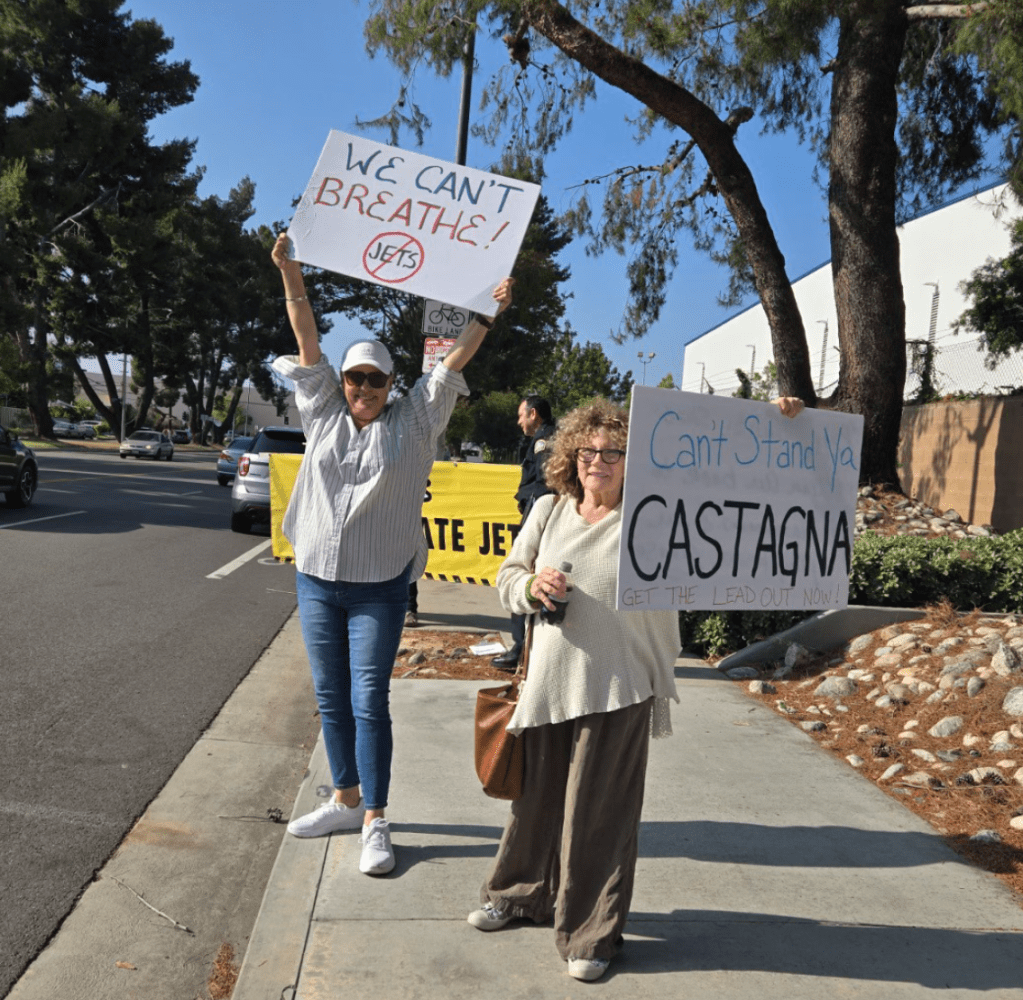
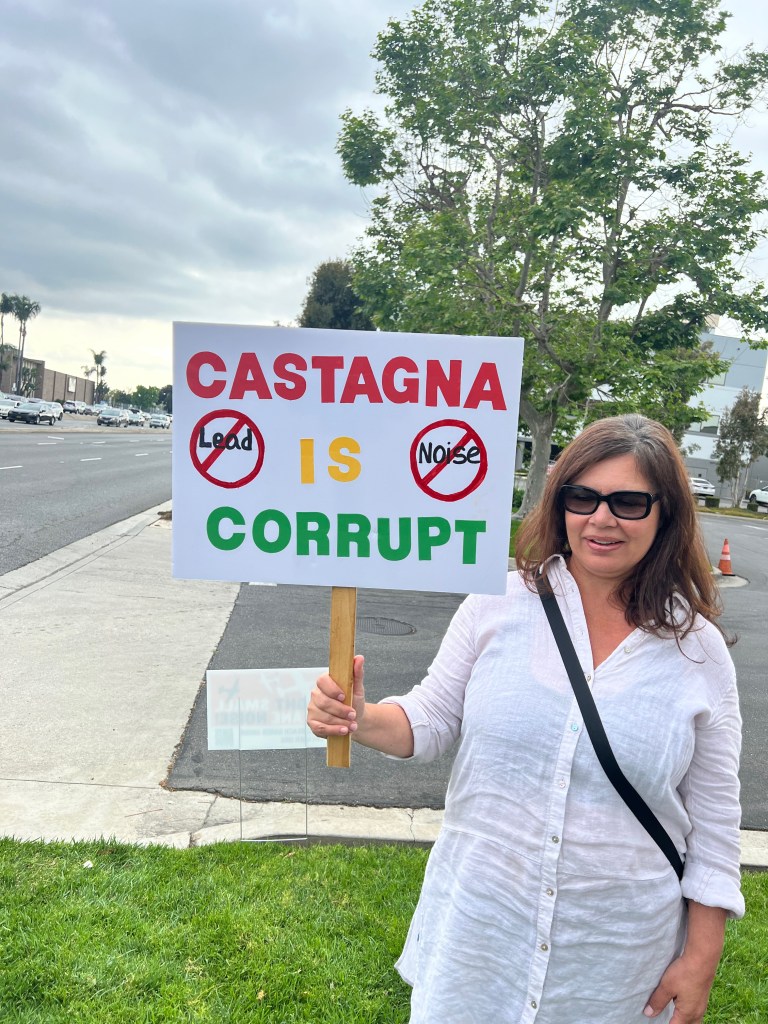
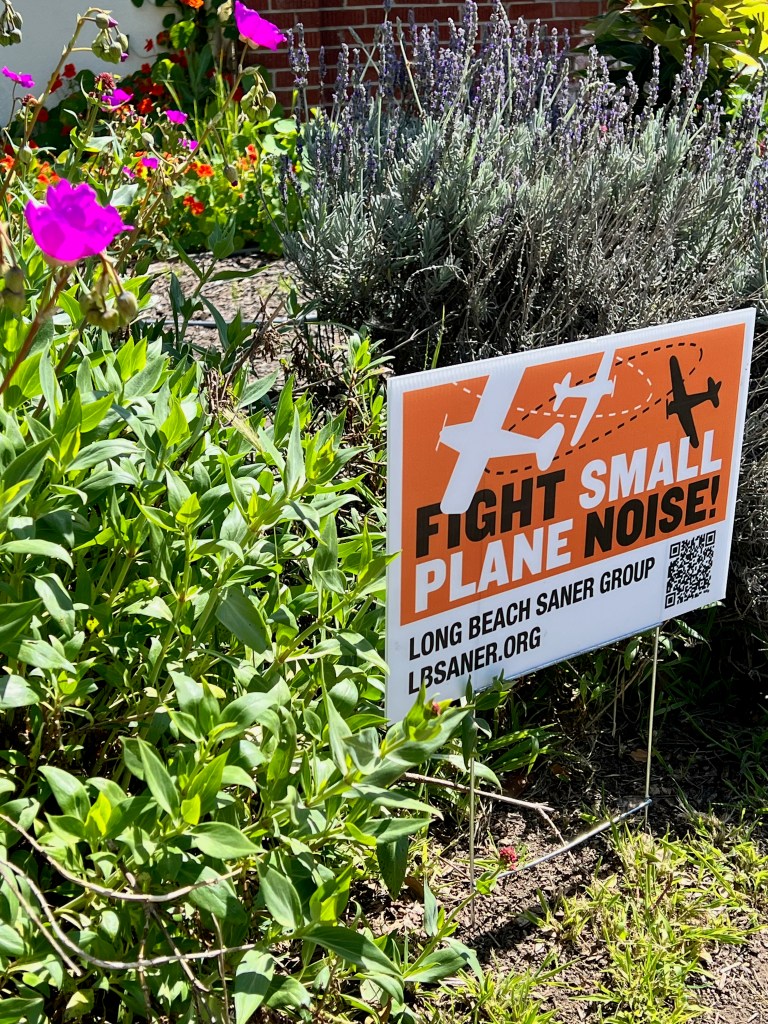
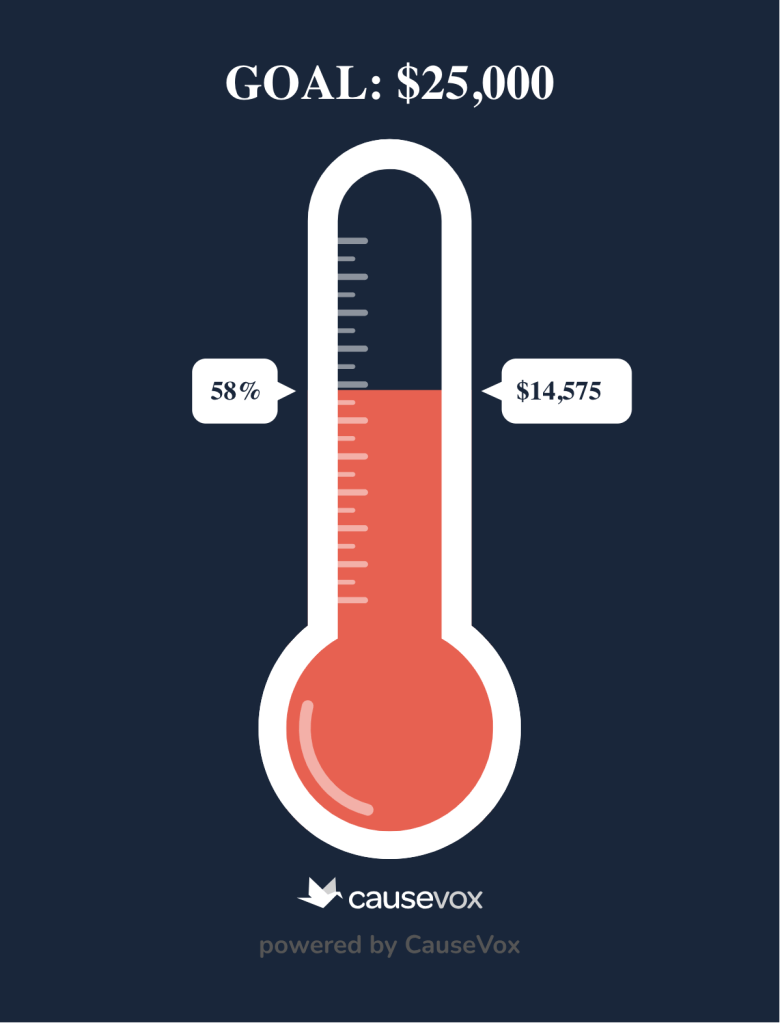
Let’s continue our efforts sending emails, displaying yard signs, contributing donations to support our legal team, participating in protests, and help to organize fundraisers.
Together, we are stronger!
The letter sent to the city follows:
October 22, 2024
Steven M. Taber
staber@leechtishman.com
VIA USPS and Email (dawn.mcintosh@longbeach.gov)
Ms. Dawn McIntosh,
City Attorney
City of Long Beach
411 West Ocean Boulevard – 9th Floor
Long Beach, California 90802
Re: Training Flight Noise During Curfew Hours at Long Beach Airport
Dear Ms. McIntosh:
Leech Tishman represents Long Beach Small Aircraft Noise Reduction Group (SANER). SANER, as you know, is a group of Long Beach residents who are fighting back against the onslaught of small aircraft noise that has been steadily increasing for several years. Their primary issue with small aircraft noise is well within the City’s authority to stop. That problem is training operations at Long Beach Airport (Daugherty Field) (the “Airport”).
The City of Long Beach has something that many other municipalities across the country wish they had: a noise ordinance restricting aircraft noise and operations that is not preempted by federal law. The City of Long Beach Airport Noise Compatibility Ordinance (Long Beach Municipal Code Chapter 16.43). While SANER does not have any issue with the commercial aircraft and their compliance with Chapter 16.43, it does have an issue with training operations that take place at the Airport. Under Chapter 16.43, training operations are prohibited between 7:00p and 7:00a during the week and between 3:00p and 8:00a on Saturdays, Sundays, and major holidays. Mun. Code § 16.43.030.A. SANER’s demand is simple. The Airport should not grant permission to aircraft wishing to perform training operations during the above-mentioned times.
The members of SANER as well as other residents of Long Beach have been complaining to the Airport and the City regarding training operations taking place at the Airport outside of the hours allowed in § 16.43.030.A. The City and the Airport have responded that the operations taking place during the prohibited hours are not “touch-and-go” operations specifically prohibited under § 16.43.030.A, but “taxi back” operations, which, the City and the Airport claim, are not prohibited activities.
The City and Airport claim that a “taxi back” is not a prohibited activity because the definition of “training operation” does not specifically include “taxi back” operations and it is not included in § 16.43.030.A as one of the prohibited activities restricted to specific hours. Moreover, the City and Airport claim that § 16.43.030.A cannot be changed to include “taxi back” operations without losing the “grandfather” status of the entire Chapter 16.43. However, the City and Airport have been defining prohibited activities too narrowly.
There is no doubt that a “taxi back” operation is a training operation and that all training operations are subject to the 16-43-030.A curfew hours. The flight schools sending student pilots to do “taxi backs” at hours when training operations are prohibited are not doing the “taxi back” out of operational necessity. They are using the training operation to practice landings and takeoffs. Therefore, it is a training operation. There is also no doubt that § 16.43.030.A only allows training operations during specific hours. Section 16.43.030 is titled “Prohibited Activities,” and subsection 16.43.030.A is titled “Training Operations.” Moreover, the definition of “training operation” in Chapter 16.43 does not include an exhaustive list of prohibited activities. It states that “training operation” means “Touch and Go, Stop and Go, Practice Low Approach, and Practice Missed Approach Operation, or any of them.” Mun. Code § 16.43.010.P (emphasis added). The addition of “or any of them” to the end of the list is to be construed that the listed items are not an exclusive list. Therefore, “taxi back” is a training operation and it is prohibited at night during the Training Operations Curfew Hours.
Both the City and Airport have long interpreted 16.43.030.A to apply to all training operations. The City and Airport state in its “Community Guide to Aircraft Noise” that “Long Beach Airport established limitations on hours of training and run-ups, including early curtailment on weekends and holidays, and the closure of all but one runway during late night hours.” Guide, p. 4 (emphasis added). Similar language can be found in the Long Beach Airport Association’s “History of LGB’s Noise Compatibility Ordinance,” which states that “[i]ncluded in the ordinance are noise limits for arrival and departure for each runway, limitations on hours for training operations and engine run-ups (other than preflight).” Long Beach Airport Association, Aviation Noise Abatement Committee, Lesson Plan, p.1. Thus, the City and Airport have long considered 16.43.030.A to apply to all training operations, not just the enumerated operations. Because “taxi backs” is a training operation, it is prohibited outside the hours listed in the Ordinance.
Moreover, to classify “taxi back” as exempt from the restricted hours of § 16.43.030.A would require a strained interpretation of the ordinance that contradicts the purpose of Chapter 16.43. When interpreting an ordinance, the courts in California have said that even when a statute’s text appears clear, one must consider the statute’s context to avoid absurd results. As the California Supreme Court said in Copley Press, Inc. v. Superior Ct., (2006) 39 Cal. 4th 1272, 1291, “our task is to select the construction that comports most closely with the Legislature’s apparent intent, with a view to promoting rather than defeating the statutes’ general purpose, and to avoid a construction that would lead to unreasonable, impractical, or arbitrary results.” See also Poole v. Orange County Fire Authority, (2015) 61 Cal.4th 1378, 1385; Horwich v. Superior Court (1999) 21 Cal.4th 272, 276, [“‘we do not construe statutes in isolation, but rather read every statute with “reference to the entire scheme of law of which it is part so that the whole may be harmonized and retain effectiveness.”’”]. The purpose of Chapter 16.43 is to limit the deleterious effects of aircraft noise on the residents of Long Beach. Indeed, the title of the Chapter is “Airport Noise Compatibility Ordinance.” Interpreting § 16.43.030.A in such a way that it prohibits “touch-and-go” training operations, but exempts “taxi back” training operations is contrary to the intent of Chapter 16.43 in general and the intent of § 16.43.030.A in particular. Indeed, it makes a mockery of the ordinance, which protects Long Beach residents from aircraft noise at night. Interpreting § 16.43.030.A to exempt “taxi backs” from compliance leads to an absurd result and is clearly an attempt to find a non-existent loophole in the ordinance. It is clear from the ordinance that the provision is meant to apply to all training operations, not just the training operations specified.
SANER demands that the City of Long Beach, as owner/operator of the Long Beach Airport, direct the Airport’s Noise Abatement Office to work in conjunction with the Air Traffic Control Tower to ensure that “taxi back” operations are not flown after the curfew on training operations. Further, SANER demands that any training operation at the Airport must be conducted within the hours specified in 16-43-030.A.
SANER would appreciate acknowledgement from the City that it has received this letter and that these requests are being considered. Without such acknowledgement, SANER will evaluate its legal options to protect the residents of Long Beach’s health and welfare.
If you have any questions or comments, please feel free to call me at (626) 395-7300 or send me an email at staber@leechtishman.com.
Very truly yours,
LEECH TISHMAN FUSCALDO & LAMPL, LLC
Steven M. Taber
The SANER team interviewed a number of potential attorneys and found that Steven Taber of Leech Tishman Fuscaldo & Lampl fit the criteria we were looking for. We have received an acknowledgement of receipt of the letter from the City. We await their reply and action on this matter.
SANER was formed with the belief that the City was allowing flight schools to violate the noise ordinance by training outside of hours written into the ordinance and agreed to by the City.
Thousands of noise violation reports have been filed with the LGB Noise Office, hundreds and thousands of phone calls and emails sent to airport staff and elected officials have been made by residents to report the barrage of General Aviation activity over our neighborhoods.
We were repeatedly told by airport staff and our representatives that no violations had occurred. Our Council representative failed to stand up for us or advocate on our behalf, insisting there was nothing they could do. We disagreed with that stance.
We studied the Noise Ordinance, educated ourselves on FAA policies, joined with other airport adjacent neighborhood groups throughout the country and became more versed in the issues & health concerns of aviation noise abuse than those who represent us. We thank those groups for sharing their experience and for helping to point us in the direction of solutions. We are not alone!
In addition, we have demonstrated, showed up at Council and lined up to comment, held fundraisers, applied for grants (denied, but more on that in a later post), distributed flyers to doorsteps, delivered yard signs, and held meetings. All of which led to no meaningful changes by the Airport or city officials.
All this effort led us to hire our attorney, Steven Taber to whom we are grateful to for taking on our concerns and studying the issues here in Long Beach.
As stated in the beginning of this post, we must continue our resolute and steadfast dedication to maintaining a liveable and healthy neighborhood minimizing airport noise and pollution by continuing to follow and support SANER.
This is a beginning, not an end.





 Long Beach SANeR Group